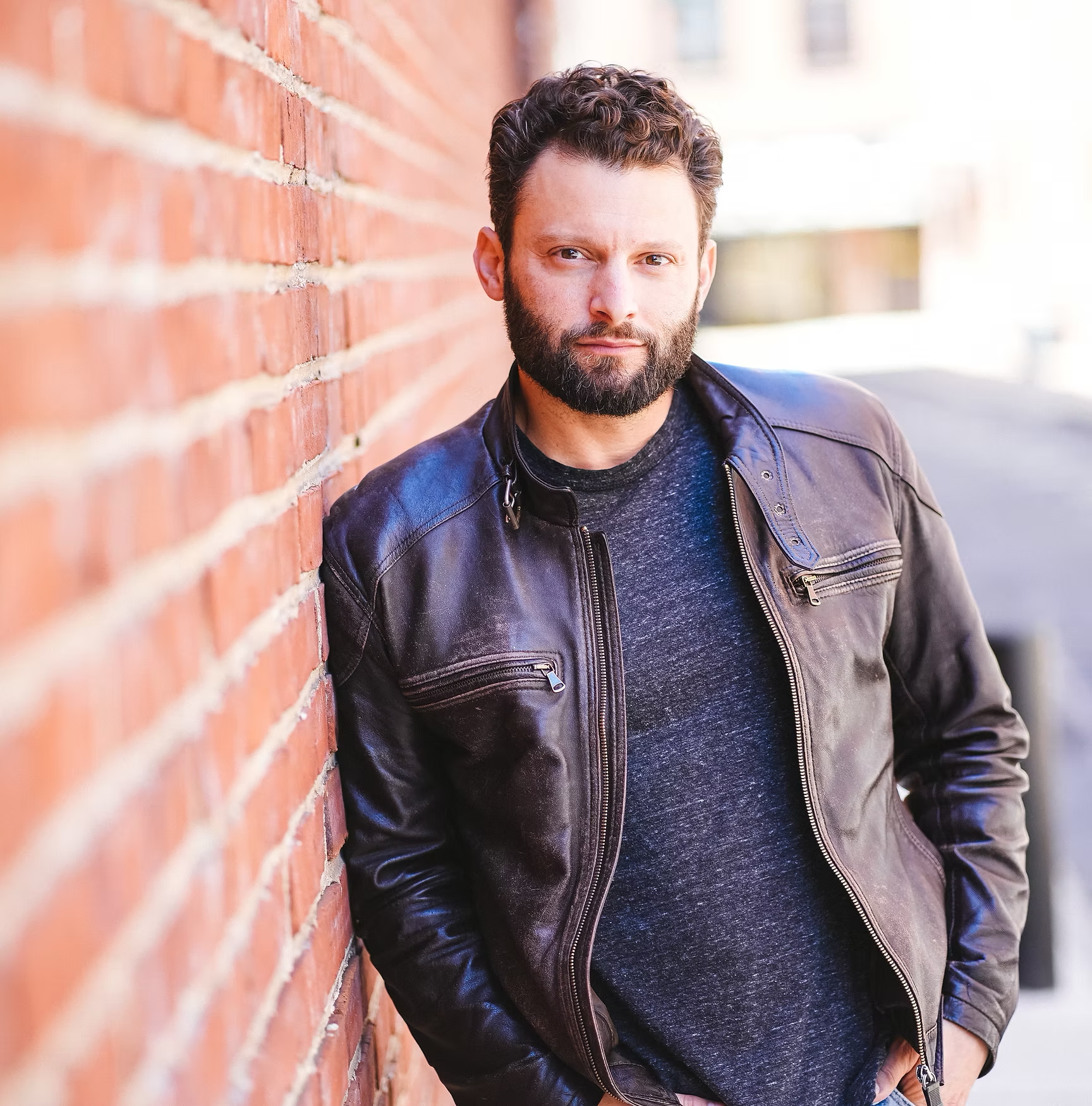
Iran’s supreme leader Ali Khamenei was killed almost a week ago — so who’s running the country? Will Iranians seek change in the streets, despite the brutal crackdown they faced in January? Could Kurdish militias march on Tehran under U.S. and Israeli air cover? Should Westerners trust exiled oppositionists like former crown prince Reza Pahlavi?
Transcript
Note: this is an AI-generated transcript and may contain errors
Jon Bateman: Iran is in flames, with the U.S. And Israel bombarding around the clock. The explosions make for great television, but there's been scant attention to what's actually happening inside the country. The Supreme Leader was killed almost a week ago. So who's running Iran? Is the Iranian regime unified and vengeful, or paralyzed and fractured? What about Iran's people, who took to the streets in January only to face a brutal crackdown? Are normal Iranians ready to risk their lives again for another shot at change? I can count on one hand the number of people who can credibly answer these questions. One of them is Kareem Sajjadpour, who joins me today. I relied on Kareems writings when I was a young intelligence officer, tasked with understanding Iran's regime and its top leadership. I never imagined that a decade later, all my intelligence targets would be dead. And Kareem would be on my podcast to explain what comes next. Events are moving very quickly right now, so we're releasing this episode uncut just after we record it on March 5th. I'm Jon Bateman, and this is The World Unpacked. Karim Sajidpour, welcome to The World Unpacked.
Karim Sadjadpour: Thank you for having me, John.
Jon Bateman: We're very lucky to have you here. You are the man of the hour with everything happening in Iran. I know you stayed up late last night doing CNN. You woke up early this morning to do NPR Morning Edition. And now you're here on The World Unpacked talking about a country that is on fire. I don't know any other way to begin a conversation about Iran than asking the most basic possible question that is often not how the mainstream media is covering this issue, but it's essential. Who is running Iran? Who is in charge of the country right now?
Karim Sadjadpour: So the assassination of Ayatollah Khamenei was the political equivalent of a bunker buster. You know, arguably the longest serving dictator in the world, 37 years he had been ruling Iran. And for most Iranians, it was the only leader they'd ever known. And so when someone has been ruling for four decades, just abruptly is killed, that obviously leaves a vacuum which could take many years to fill. The short answer to the question from folks I speak to in Tehran is that there's essentially two people who have now taken over the political and military affairs. The person who's kind of the political leader is a guy called Ali Larijani. He's a long-time Islamic Republic apparatchik. He has a background in the Revolutionary Guards, and he's thought to be not a ten out of ten ideologue, let's call him an eight out of 10 ideologue. He kind of aspires to be like Iran's Deng Xiaoping, but he also oversaw the massacres, reportedly oversaw the massacre that took place last January. So, you know, my line about him is that he's done more massacring than modernizing. Now, the other division of labor, the military affairs, is reportedly based on people I speak to in Tehran. Is a guy called Mohamed Barghel-Ghalibov. Ghalibof also has a background as a Revolutionary Guard commander. He's trained as a pilot. He's currently Speaker of Parliament. And so these guys are at the moment, they're in some ways rivals because they both aspire to be national leaders, but they've banded together. And everyone is waiting to see who will be named the next Supreme Leader. It's been reported, although not 100% yet confirmed that Khamenei could be succeeded by his 56-year-old son. Mostaba Khamanei, if that is indeed the case, Ayatollah Khamani, as I said, ruled for 37 years. It's not clear to me whether Mostaba will live for 37, will rule for 37 days because he will have a bull's eye on his back. The Israelis will likely try to assassinate him.
Jon Bateman: There are so many different threads I want to pull here, but let me just ask all the people that you just mentioned, these are the people that are trying to govern a country in crisis, under fire from abroad. We've got assassinations, bombs being dropped. One might think that basic things like communicating with each other and moving around even the capital city of Tehran might be very, very difficult. So when we say these people are in charge, what do you think that means? Are they actually able to command and control the military, give orders to the security forces, perform basic services and functioning of the state? Or are we seeing signs of breakdown in those areas?
Karim Sadjadpour: I mean, that is such a great question if you try to put yourself in the shoes of these individuals. You know, they probably are all targets for assassination. They know that all of their communications have probably been penetrated, so it's not that they can easily communicate with one another. Their population, a lot of their population despises them. And then, you know, this morning there was a piece in The Economist that showed that Israel is bombing Iran at the moment about 1,000 times per day. So there is, on so many levels, an existential crisis which they're facing. You know, I don't know how they're getting any sleep. And so it is not clear to me how sustainable this is for this regime to be enduring this kind of military barrage from both America and Israel. And they're also trying to respond against their golf partners. I think, well, I won't go to what their strategy is. Maybe I'll wait and you can ask me that if you want to. Okay, Ab.
Jon Bateman: OK, I absolutely will. But before we get there, when the three people that you mentioned, Larijani, Kalibaf, Moshtamma Khamenei, I'm trying to think of the common themes that unite them. They all have been part of the close inner circle, the power structure of the regime, in some cases for decades, moving back and forth between military, political, religious circles. Is there a level of... Trust there? And are these people all true believers in the revolutionary project of the Islamic Republic that Khamenei gave his life for? Or are there other agendas at play and people, maybe within this group or maybe in a slightly wider circle, actually seeing some opportunities here to shift the direction of the country.
Karim Sadjadpour: So the one common threat for all of them is survival. And at this moment, it's literal survival. It's obviously survival of the regime, but their literal survival as well. And I suspect that they have different views about what is the best way for them to survive as a regime. And this has been a long-standing debate within the Islamic Republic. And essentially, Ayatollah Khamenei's view had prevailed that when you're. Opponent is pressuring you you shouldn't take a step back because that's not going to alleviate the pressure that's going to Project weakness and your opponent will take a steps forward So the long time doctrine I would say that became inextricable part of the Islamic Republic's identity was resistance Resistance against America resistance against Israel now much the Bahamani. I think Wants to uphold that worldview of resistance between Ghalibov and Larijani, as I said, I don't think if we say that Khamenei was a 10 out of 10 ideologue, I would put them in the eight out of ten category in that they're not going to want to have a friendly relationship with America or even recognize Israel, but to save themselves and save the regime, I think Larijiani at least may be prepared to make some tactical compromises. The question is, you know, what is going to be demanded of him by President Trump, and that's not clear.
Jon Bateman: Yeah, if I were in the White House Situation Room or the Pentagon hearing this, moving from a 10 out of 10 to an 8 out of ten, that sounds like pretty good news. Maybe there's somebody I could do a deal with. I mean, we'll get to what the US wants. It's incredibly unclear and, in some cases, very bold and difficult for any Iranian leader to swallow. Tell me what you thought when you first started seeing these reports that Moshtar al-Khamenei, the son of the deceased Ayatollah. Could emerge as the next supreme leader. I mean, this is a moment in a way that the regime has been preparing for for decades. Everybody has been watching Ayatollah Khamenei age. He was 86 years old, the time when he was killed by Israeli and US forces. We all knew this succession was coming. There's been a lot of rumors and speculation for many years. Probably nobody expected it to happen under these incredible circumstances. So when you heard this name, what did that say to you about the priorities, the trade-offs, the dilemmas that regime insiders are making, and why him now?
Karim Sadjadpour: So I wasn't particularly surprised when I heard Mujtaba's name because there had really, in my view, only been two serious people in the conversation for succession over the last five years. And that was the former president, the late president, Ibrahim Raisi, who died in a helicopter crash in 2024, and Mujtaj Khamenei. And on one hand, a lot of people thought it wouldn't happen because... This is a regime that came to power, deposing hereditary monarchy and saying heredity monarchy is un-Islamic. And so a lot of people thought that, you know, they can't give the job to Mojtaba. That will undermine, you know their whole argument. But the reality is that in the position of supreme leader, I think they're looking for someone who is palatable to the revolutionary guards. And the senior clergy, and has a public name recognition. And there probably wasn't a lot of people who checked all three of those boxes. And someone said to me in Tehran, in some ways, Mojtaba's stock rose after his father, his wife, and his mother were all killed in this missile strike.
Jon Bateman: OK, so the deaths of most of his close family members maybe would allow him to be seen as more of a martyr, someone who has been suffering for his country, rather than a nipo baby of the Supreme Leader.
Karim Sadjadpour: Yeah, there's a term in Persian they they say Shahid is in there a living martyr And so, you know that could have a role now john by the time this comes out. We may find that Most of us either been killed or they end up going in another direction. But as of now Whatever happens most of a harmony so long as he's alive is going to be an important figure in the post Ayatollah harmony, right?
Jon Bateman: So Iran watchers are familiar with Mustafa. People have known that he's part of the conversation. I'll tell you, I was surprised in the following sense. This is a regime that is fighting for survival, like you said. You might think that one of the things they'd be really worried about is legitimacy with the populace. You've said elsewhere that huge proportions of the Iranian population have become incredibly disenchanted with the regime, with the poor quality of life, the corruption, the isolation. It's hard to think of anyone who would be a clearer signal of continuity and doubling down, that maybe he'll just be killed after 47 days, but the other option is it's another 47 years of the same bowl of shit you've been eating all your life. Does that signal something about a regime that maybe feels a little self-confident about its internal status? And is more worried about elite politics than popular legitimacy right now.
Karim Sadjadpour: I don't think it's self-confidence. I think it is a recognition. Ayatollah Khamenei was obsessed with the collapse of the Soviet Union. And he, like Gorbachev, believed that the Soviet union collapsed because Gorbachev tried to reform it. And this is an observation which some of the great political philosophers like Machiavelli and Tocqueville have made, that the most dangerous moment for any bad government is when they try to reform themselves.
Jon Bateman: Xi Jinping in China also has cited this frequently, yes.
Karim Sadjadpour: Absolutely. And so we call these folks, people like Khamenei, Ayatollah Khamanei, Moshe Tsobe Khamnei, we call them hardliners. They call themselves principalists. And that means that they're loyal to the principles of the revolution. And their belief is that those principles of the revolution are like pillars of a building. And if you abandon those pillars, it's going to collapse on top of your head. So I don't think it's necessarily because they feel self-confident. I think they recognize that. The gap between them and society is, in my view, almost irreconcilable, but it's this view that if we try to change, it's not going to prolong our shelf life. It's going to accelerate our demise.
Jon Bateman: It's so fascinating how rigid Iran's power structure seems. At a time when an outsider might say, this is a moment of the greatest flux and uncertainty in the history of the Islamic Republic established in 1979, you might think there'd be people somewhere in this power structure who were waiting for an opportunity to shake things up, who wanted to take things in a different direction, maybe not toward democracy. Um. But wanted maybe a more vibrant economy, maybe better relations with some neighbors. It just seems like those voices are being silenced right now, or there's just no time to hear from them.
Karim Sadjadpour: I do think that within the regime there were and are some who have this aspiration of the China model what happened to China post Mao which is essentially we're not going to open up politically but we'll open up economically, we'll ease social restrictions, we will prioritize wealth creation rather than cultural revolutionary ideology. At the moment, I think those folks have not been empowered in the system because it's a regime fighting for its survival. And when you're fighting for your survival, you kind of go back to your base instincts. And I think at the moment if we want to talk about President Trump, I think he was hoping to depose the number one guy and do a deal with the number two guy, just as he did in Venezuela. And at the moment, there's no one in the Iranian system who has that legitimacy, the authority, and the will to break with 47 years of continuous revolutionary ideology.
Jon Bateman: Yeah, I mean, I think you said these are principalists, and the principle is death to America, death to Israel. It's hard to bargain from that framework. Trump, by the way, has said several times that the US had in mind a few people that they were hoping to deal with and that they weren't killed. I never know what to make of these kinds of comments. I mean some of this is the performative ... We're so powerful we can't even help ourselves, right? We're killing even more than we thought. Sometimes I think he's just trying to be funny. Is there a seriousness there? Did the U.S. Maybe have in mind their Delci Rodriguez in Iran?
Karim Sadjadpour: I don't think that there were any potential Delsie Rodriguez's that were killed. I suspect what's happened is there has been a division of labor between the United States and Israel in this war, which is now five days old, which the U.S. Is focusing on degrading Iran's military capabilities, missiles and nukes, and perhaps command and control centers. And by most accounts, it's Israel which is carrying out these political assassinations. So it seems like President Trump is going along with it. It's not, I don't know if he is fully aware of what the Israelis are doing. You know, so far, and this could change in the next weeks, but so far it hasn't bombed the regime into pragmatism.
Jon Bateman: I think you said something so important that even I am forgetting sometimes as I'm following this war. Iran is at war with two different countries, and we don't really know the level of political and military coordination happening between the United States and Israel. Presumably there's a lot going on there, and after Khamenei was killed, there was both press reporting suggesting that it was an Israeli bomb that hit him, but it U.S. Intelligence that pointed to the target. Trump subsequently went on true social and took credit, but do you have a sense of whether the left hand knows what the right hand is doing? Is it one war or two that's being waged on Iran right now?
Karim Sadjadpour: It feels to me that it's very close coordination. I don't know if you could carry out, prosecute a war like this without having profound coordination, but it does raise a question, which is do both countries have the same end goal? And I'm not sure that they have the end game. I think if you went to President Trump and Prime Minister Netanyahu separately and say, okay, write on a piece of paper. What is your ideal outcome in Iran? Those, the way they would write is perhaps similar and that I think they would both want to see Iran, which is somewhat similar to what we saw pre-revolution, a country which is essentially, you know, tries to follow its national interests rather than ideology. There was a good relationship between Iran and Israel pre-revolution. U.S. And Iran were close partners. But absent that ideal scenario, If you can't get 10 out of 10, what are you willing to go for? I think the Israelis may not mind an Iran which looks like Syria, which is kind of a failed or failing state, which has been totally debilitated militarily. That's not their ideal outcome, but for many years Iran has been their chief adversary, and if you can have your chief adversary significantly weakened. That's not necessarily a bad outcome. I think for the United States and our partners in the Persian Gulf, they don't want that outcome. Trump's goal wasn't to turn Iran into a failed state which is not fulfilling its enormous positive potential as a nation.
Jon Bateman: Trump is calling Kurdish leaders and asking them to make incursions into Iranian territory. So I think he might be walking us into a civil war or a failed state. We should come back to that. But just briefly on the US and Israel, is there a scenario in which the war aims may be relatively tightly coordinated now, but they could drift apart over time? Could there be a scenario in which one country, maybe the US, is ready to stop, and the other country, maybe Israel, wants to keep going?
Karim Sadjadpour: Absolutely. I think that was the case last June in the 12-day war. It was something that President Trump kind of announced abruptly. Okay, this war is over. It's going to be called the 12 day war and Israel probably wanted to do a few more rounds of fighting. This time around, they must feel that, you know, they are free reign over Iran's skies and there's still a lot of whom they probably want to assassinate, namely Mojtaba. Harmony and, you know, continue to go after Iran's missile arsenal, its nuclear program. And President Trump may have very different objectives. As the U.S. President, you're obviously sensitive to media. You're sensitive to popular opinion. You are sensitive to the price of gasoline. And so we know from Trump's history that he's capable of kind of abruptly declaring an end to hostilities, but I think that it seems to me it's gonna be difficult for him to do that without some kind of political victory. Given this war, there's been very large costs incurred in this war.
Jon Bateman: So the home run for Trump and Netanyahu would be regime change in Iran. I mean, this has been explicitly asserted as a goal or perhaps the goal from the beginning of the bombing. What are we seeing on that front? First of all, are there signs that the populace in Iran, which took to the streets in great numbers in January over a variety of domestic grievances but was then brutally crushed. Are we seeing any renewed signs of life, signs of activity from the populace and dissenters in the country?
Karim Sadjadpour: Not yet. I think people are shell-shocked by this war and President Trump said I think the night of the war that people should stay in their homes until the bombing stops and then to God and seize their institutions. But I was talking to an American general who served in Iraq and he said, you know, all populations that are living under tyranny. Understandably want a magic bullet which is only going to kill their oppressors and not do any damage to civilian lives. And obviously that doesn't exist. And in my view, after the massacres that happened last January and after President Trump, it said on nine occasions that help was on the way. In my view a majority of those who protested the regime did want to see President Trump make good on this help. It's not clear to me what percentage of those people who supported this war still continue to support it. I don't have a good feel for that.
Jon Bateman: You have said that maybe 80 to 85% of the Iranian population is against the regime. I wonder if you could break down that figure further. What percentage do you think is against it but in a kind of apathetic or resigned way? What percentage is so against it that they might be willing to take personal risks? I mean, we've seen in many countries, you don't need a majority of the population. To come out and create the sort of people power that shakes up politics or even brings down a government. It can be a vanguard of very impassioned smaller groups of people that others are sympathetic with and that ultimately, I guess, you need somebody in the security forces to sort of sympathize with to some degree. So how do you break down that 80% to 85% figure into the the passion that people have to take the country into their own hands and create a new direction.
Karim Sadjadpour: It's a great question, and we do know from history that even great revolutions, large-scale revolutions like Iran in 1979, oftentimes it's not more than 10% of the population that takes part in those. Now, when you have a nation of 90 million people, let's say the adult population is 70 million people. That's still a lot of people. But right now, the regime, someone who is kind of his family is part of the regime. In 2009, when there was large scale protests inside Iran, it was the Green Movement protests. You know, I once asked him, I said, how much support do you think the system has? And he said, you know, what matters for a regime like Iran is not the breadth of your support, it's the depth of your supporters. So even if we only have 15, 20%, then you kind of concede it as much, but they're the kinds of people who are willing to go out and kill and die for you. That's more valuable than 80, 85% to just post negative things about you on social media. And the dynamic of Iran is that you have a regime which, again, this could change in 48 hours, but at the moment it's highly armed, organized, willing to kill to stay in power, because they believe it's kill or be killed. And you have this society which is unarmed, unarmed, unorganized, and by virtue of the fact that this is a, I would argue, a largely secular society that's trying to separate mosque and state, not join in mosque and State, they're not the kinds of people who believe in martyrdom, mass martyrdom. And so if there were, if people weren't being shot at, and let's say, I'll give you kind of a list, but a concrete hypothetical. Thank you very much. Next week, one day, Iranians were allowed to assemble without fear of getting killed. I think tens of millions of people would show up. And that's what in some ways makes the fact that millions of people collectively took to the streets last January very significant for me. I've lived, I lived in that, inside Iran for a couple years and people who've lived under these brutal dictatorships know that it's a very scary environment when you go outside and you see thousands of men carrying machine guns with their finger on the trigger. And so this is the current environment right now and with the regime, they feel it's killer be killed. And one of the... Responsibilities and it's going to be a task it's gonna be difficult but for any effective opposition movement opposition organization leadership is peeling some of those folks away from the security forces and reassuring them that they're not going to killed they're not gonna have the same role in Iran's tomorrow but they can play a role in your arms tomorrow
Jon Bateman: So let's talk about the security forces. That's essential to any change in the Iranian regime. The people with guns have to allow it or fight for it. We've already talked about that small cadre of senior-most Iranian leaders who have been deeply enriched and aggrandized in their position and are committed to the revolution, whether for ideological or just financial and personal reasons. I wonder what you make of the rest of the Iranian security forces, their military, their police forces, the gendarmerie, the Basij militias, the morality police, the other types of men with guns that roam around. When we saw these huge mass protests in January, I think one conclusion, a hopeful conclusion that many Westerners drew is there really is a deep groundswell of anti-regime sentiment. You might also draw a more depressing conclusion, which is that people with guns are still willing to turn those guns on their brothers and sisters and massacre them by the thousands or tens of thousands.
Karim Sadjadpour: And that is absolutely right. And that's what we've seen in Iran. In some ways, this mentality I was saying earlier of killer be killed, it's become a self-fulfilling prophecy for them. Because of the fact they've killed so many people, the rage and anger of society has made the gap between governed citizens and the regime irreconcilable. And Now, I have, by both experience and anecdotally, I know that, I would even argue, a majority of people in the system are no longer true believers. I always quote a friend of mine who was a long-time political science professor in Tehran, and he said, at the beginning of the revolution, the regime was composed of 80% ideologues and 20% charlatans, and now it's the reverse. There's only 20% who are kind of true believers, and 80% their motivations are financial, political, and those are the types of people that you can cut deals with. But those are not the people at the top of the pecking order right now.
Jon Bateman: Let's talk about some of the other actors in and around Iran or outside of Iran that seem to represent some kind of oppositional faction or constituency of some kind. First of all, Americans and others have been seeing the name of Reza Pavlavi a lot. He is the deposed crown prince of Iran under the Shah. Um, he's been living in exile for many years, and recently he's had this growing profile, uh, writing pieces in the New York Times, appearing on television. And his claim to the world is that he represents an Iranian diaspora and indeed people inside the country, um, that want a different future. Uh, who is this man? Who does he represent? And what ideas does he represent.
Karim Sadjadpour: So Reza Pahlavi, as you mentioned, was the son of the late Shah, and when the monarchy was deposed in 1979, he had gone into exile. I think he was 18 years old, so he's essentially been living in exile for the last 47 years, most of it in now suburban Washington, D.C. With the advent of satellite television and social media, the great scholar of Iran, Abbas Milani, said in the age of the internet, diaspora communities become part of the civil society of their heritage countries. And so he has been able to be in daily comunicado with Huronians for perhaps two decades now. And I think given how hopeless people feel in the Islamic Republic and people's total lack of confidence that this is a regime which is capable of reforming Reza Pahlavi's stock has has grown and grown over the last 10-15 years and it's coincided with some of these satellite television networks that have created documentaries which have you know produced kind of revisionist accounts of what the shah was like and what life was like under the shuh. For decades people read about the monarchy and their Islamic Republic textbooks as just these, you know, these evil characters and Because life under the Islamic Republic for most Iranians, I would argue was, you know, much more politically repressive much more socially repressive the show wasn't socially repressive and just profoundly mismanaged economically There's been a lot of nostalgia among Among those who in kind of a buyer's remorse among those who participated in the revolution. So the younger generation of Iranians now, obviously they didn't experience life under the monarchy. And that's what nostalgia does for you, which is you see the photos of what life was like, you hear the stories, you look at the currency, your stories about within Iranian passport, you could actually visit countries, you can't do that now. And so I describe it as kind of this forward-looking nostalgia to make Iran great again. And Reza Pahlavi I think represents that aspiration for many Iranians.
Jon Bateman: Let me ask a bit more pointedly, and I think from an American perspective. I'm of a generation that grew up around the time of the Iraq War. There were many people in power in the United States government who wanted that war, but also there was a group of Iraqi dissidents living in exile, famously exemplified by Ahmed Sharabi. Who became Iraq whisperers to American politicians and policymakers and portrayed their version of what was happening in Iraqi society and how U.S. Troops would be greeted post-Saddam and their own personal stash in the country. So as an American, I get my hackles up a little bit and I don't want to be led astray by another Ahmed Shalabi. What's the danger of that here? Is someone like Reza Pahlavi or other Iranian dissidents in exile, whether they're democratic, secular, monarchist, are these people reliable sources of information? And are these People whom American policymakers should be relying on for any political planning?
Karim Sadjadpour: It's a fair point, John, and we know empirically the diaspora communities everywhere tend to have more radical politics than folks living inside the country because there's no consequences, oftentimes, for you. You can afford to be more dogmatic and saying, you know, regime change now, whereas people inside the county oftentimes have much more practical day-to-day goals and are less dogmatic. In the case of the Iranian diaspora, I think that when I was living in Tehran, I haven't been there for two decades, but even then by virtue of the fact that politicians who are associated with the Islamic Republic were generally discredited. And coupled with the fact that the regime is so brutal internally, that individuals who are capable of playing kind of opposition leader roles, they're very effective at imprisoning, decapitating, sometimes killing those people. It's very difficult to be an opposition figure inside Iran. And so that is one reason why I think many people even, I would argue, This will be counter-intuitive, but I think that Reza Pahlavi probably has a greater percentage of support inside Iran than outside Iran. And the reason I say that is that the large Iranian diaspora communities in the world, it's places like United States, Canada, Europe. And these are all democracies. And so people living in democracies, especially if you spend decades living in a democracy, you're not really thinking about the idea that your goal isn't monarchy or even necessarily constitutional monarchy. Whereas inside the country, people who haven't necessarily experienced living under democracy will say, listen. This regime is brutal. This country needs a strong leader, and this is what we know. This name has a brand, it has a legacy. Iran was ruled by a monarch for 2,500 years before 1979. And let's go with what we now.
Jon Bateman: The other group that Americans are hearing more about in the last couple days are the Kurds. We've heard of the Kurd's. They are a group that lives in Iran, Iraq, other countries, lack a state of their own, and are often dispossessed. And so they have become restive and somewhat militant in some of the countries in which they operate. I think many people outside of Iran and may not even know that... In the Iranian hinterlands, there has been a low-grade guerrilla warfare that the Iranian regime has been fighting against Kurdish, Baruch, Arab, and other ethnic separatists for many, many years. They're back in the news because it's been reported that Donald Trump has been personally calling leaders of Kurdish militias, including those based in Iraq, and I think asking them to be prepared to. Be a ground force for some sort of ground assault deeper into Iranian territory. What do you make of this? What are these groups capable of? What are their goals in this situation? And what would happen if they were armed and unleashed?
Karim Sadjadpour: So I have great empathy for the Iranian Kurdish community. They're wonderful people who have disproportionately been repressed by this regime. Kurds, they have large populations in really four countries, Iran, Syria, Iraq, and Turkey. But culturally, linguistically, historically, Kurds and Iranians are there's a natural and deeper affinity there than between, let's say, Kurds and Turks, or Kurds, and Arabs. And John, one of the most haunting images I've ever seen was in the very early days of the 1979 revolution, as you alluded to, there was a Kurdish uprising them. And there was an image that a photographer took of a firing squad of revolutionary guards. Soldiers killing Kurdish dissidents at point-blank range in a firing squad. And the photo, this image won a Nobel, I'm sorry, this image won the Pulitzer Prize. And the photographer was so fearful of his security, his safety that it took him three decades to publicly come out and accept this, except acknowledgement of this photo and so. That's a detour that you can you can cut if it's not not germane to this but
Jon Bateman: No, we'll keep it. And just to add in my own story, you know, I was an intelligence officer focused on Iran, learning about the country from my colleagues. I didn't know that. I learned something new. And I remember the day when one of my colleagues referred to curd whacking season. This was his gallows humor to describe the ongoing cycles of violence and repression that had been targeted at these communities and these armed groups. It gave me a little bit of a window into the brutality of the Iranian regime, and also for people who follow the Iranian Regime, the brutalization of their own mental space. But tell us about what would it mean for these groups to become actively involved in, I guess it would become a four-part conflict, or even more, because these groups are not necessarily internally united themselves.
Karim Sadjadpour: Yes, so I think the danger there, and this is me coming at it from the perspective of someone who believes that it's in the interest of Iranian people, but also in the U.S. National interest for Iran to be a pluralistic representative democracy, even though that may not be attainable right away, I think that would be in the US national interest. I think that would be good for Iranians. If you're starting to arm rebel Kurdish groups, that complicates that goal because Kurds constitute about 10% of Iran's population, and Iranians are very sensitive about the idea that great powers are trying to foment kind of ethnic unrest in the hopes of fracturing the entry. This has long been a conspiracy theory among... Iranians Iranian nationalists about great power machinations. And so there is a danger that if the United States start to arm and fund Kurdish groups that a lot of Iranians non-kurdish Iranians Persians will say We're not signing up to that. You know, this is this is a red line for us the territorial integrity of the country is a Red Line and They will not be on board with that and so it really undermines the opposition. And so I don't think that, you know, the regimes like Iran, like Vladimir Putin, they stay in power because they're able to divide and rule. Even if they only have 20%, if that 20% remains united, the 80% is divided, they can continue to divide and rule in some ways, a strategy which is focused on arming Kurdish groups. It plays to the strengths of the regime of dividing and ruling.
Jon Bateman: You could also say, again, it's shades of Iraq. We had an authoritarian regime of a multi-ethnic society, was somehow able to keep that society together, albeit through repression and discrimination in many cases. We used the force of arms to create regime change. And when that country fell apart into different factions, it became worse than we had before. I will just say, I will grant you all of that. And yet... From Donald Trump's perspective, he wants to see how far he can take this, I think, without risking American lives. And he's looking for a ground force. And I think he thinks he may have found one. I will say, I was surprised by the news that he was personally making these calls.
Karim Sadjadpour: Yeah, I was too.
Jon Bateman: So let's just say he barrels forward, and this is the ground force. How does that change the war?
Karim Sadjadpour: So one of the questions I have is whether the template they're thinking about in their head is indeed Iraqi Kurdistan. Because, as you know, we set up a no-fly zone in Iraqi Kurdestan, basically giving the Iraqi Kurds autonomy to manage their own affairs. And, you know that um, required, um, sustained U.S. Support over perhaps a couple decades.
Jon Bateman: And I don't think that would be that exciting to someone like Trump, just to say that his achievement was to carve out a Kurdistan in a portion of, you know, the Iranian desert, right? I mean, that doesn't really seem to be doing much for someone like him.
Karim Sadjadpour: I agree. I think that if he's going to go that far, the goal is for him probably going to be he wants to be the one who deposes this regime that's ruled for 47 years. I think I've seen Trump repost things on social media saying that he's gonna be the American president that visits Caracas, Havana, and Tehran before he leaves office.
Jon Bateman: That is his self-image, and I think his mental self- image, is the man who solves problems other presidents were unable and unwilling to solve, that he's the man with the guts and the chutzpah and the strength to make it happen. So I think if he does this, probably his hope is somehow these Kurds either march on Tehran under American and Israeli air cover. I have no idea whether that's feasible whatsoever. Or maybe they somehow tie down. The elements of the Iranian security forces and make other actions possible? I mean, does any of this make sense?
Karim Sadjadpour: It's a, in my view, it's playing with fire, the potential risks of this being your chief political strategy, in view outweigh the benefits, and including for Iranian Kurds themselves, because if indeed President Trump may decide two weeks from now, the Islamic Republic gives him an offer that he likes, he does a deal. Where are the Iranian Kurds going to be then? The Revolutionary Guards may come back and inflict massive violence against them, which they have done in the past, and they'll be left holding the back. So that is a scenario I worry about very much as well. Listen, I think that I would love to see, as I said, great empathy for the Kurds of Iran, and they deserve much better than they do. I think that, in a way, everyone will need to thrive together. I don't see a scenario whereby outside powers can come and try to play. There was a famous quote from a Lebanese historian called Kamal Salibi. And he said, you know, great powers should not be involved in the affairs of small tribes. And there's some wisdom to that. The Kurds are not a small tribe. But. In my view, we should be thinking big picture about, you know, how do we help shepherd Iran to a better future? And that should be on a macro level. And the way to do that, in my view is not arming tribes.
Jon Bateman: What is Iran's military strategy at this point? I mean, we know, and you said, they hope to survive. They hope to keep the regime intact. They want this war to end on some level. And what is their plan for doing that?
Karim Sadjadpour: I think the strategy is pretty clear and that is to, they're not strong enough to meaningfully retaliate against America and Israel. And so their strategy is to go after their neighbors in the Persian Gulf. They've gone after civilians, they've hit civilian buildings and places like the UAE and Saudi Arabia, even in Oman, their friend in Qatar. They want to spike the price of And the hopes that, two things in my view, number one, those countries who have close relationship with President Trump, go to Trump and say, end this war. This is doing real damage to us. And number two, one thing this regime has learned over the last four decades is that one of the best ways to restrain the Middle East ambitions of American presidents is to really negatively impact American public opinion. They learned this in the 1980s. It was one of the first acts that Lebanese Hezbollah did at Iran's direction was bombing marine barracks in Beirut. And several months after that, Ronald Reagan pulled troops out of Lebanon because Americans were saying, well, why are our sons and daughters in this place anyway? And so they recreated that strategy in the aftermath of the 2003 invasion of Iraq. They made life hell with the improvised explosive devices, IEDs, and they wanted to just sabotage the American enterprise in Iraq. And I think now the hope is that Americans turn on the television set these days and they see oil prices are spiking. People, there's explosions happening. Some American service members have been killed and they start to ask their members of Congress, What's going on here? Why are we? We were told we were not going to get involved in more wars in the Middle East.
Jon Bateman: I'm not going to ask you to be a prognosticator of American politics, but I am curious what you think Iran can actually achieve across the scoreboard that you've laid out here. And let me just make a case and get your reaction to it. All the Americans and Gulf and Israeli citizens that have been killed, it's very tragic. I have to say it's a lot less than I expected. American service members last time I checked. Four, six, something like that. I think Gulf citizens, Israelis that have been killed, I think it's in the dozens or scores per country. Iran has a huge missile arsenal, thousands of missiles and rockets. I mean, people have talked for years about this fearsome retaliatory capacity. Oil prices have spiked, I will say that much. Where is it? I mean, am I wrong to have this impression that Iran really has not put a lot of points on the board at this point?
Karim Sadjadpour: I think that's accurate to say. It's a regime which is significantly outmatched, obviously militarily, by America and Israel. And that's, in my view, a sign of weakness when you're having to lob missiles at hotels in Dubai. One of the things I learned, John, when I was, I did a Fulbright Scholarship in Beirut two decades ago, and my big takeaway from that year is that It takes decades to build things. It takes weeks to destroy them. And this Iranian regime, it really is in the business of destruction. It's neighbors in the Gulf. I take my hat off to them. I look at a country like United Arab Emirates. Five decades ago, the UAE and Iran went to the same elevator. Sheik Zayed of the UA pushed up, Ayatollah Khomeini pushed down. And you see this enormous gap between Emirates was a backwater five decades ago, and now it's this global hub of transport, technology, finance, and Iran is this pariah state. And so, in a way, it's kind of like, there's a strategy there. As I said, they want those countries to pressure America to stop. They wanna spike the price of oil. But there's also this kind of resentment at what these countries have managed to achieve.
Jon Bateman: How does this war end? It's a simple question, only takes a few words for me to voice it. It's probably not a simple answer. How does this war end?
Karim Sadjadpour: So one of the reasons why it's difficult to answer that is that I don't think it's clear in the president's head what his precise end game is. And when he speaks to reporters, he oftentimes suggests very different end games. Sometimes it goes as far as different regime and regime implosion. Sometimes he'll take kind of the medium option, which is the Delcey Rodriguez, let's do a deal with the number two. And then sometimes it's like, we may not even get the political change we wanted, but we've significantly degraded them and we can call it a victory. I think that at the moment, the Iranian strategy is, let's try to continue to wreak havoc in the hopes that the president will pull the plug and end hostilities. If the president continues and Israel continues, if the U.S. Continues for weeks to come, at some point it may force Tehran to make a really important decision. That is, do we, they're not gonna use the word capitulate, but do we agree to a pretty significant compromise? Or do we continue fighting and risk that this regime may actually collapse? I think the advantage in some ways that the Islamic Republic has is that this isn't an ideological president. It's not George Bush wanting to bring democracy to Iraq. He doesn't really care about whether or not this government in Iran is democratic or even, you know, very autocratic, as long as they kind of show deference to him. Prepared to make some compromises to him, I think he'll allow them to live another day. And if this war continues, they may soon have to make that choice.
Jon Bateman: Door number three, you've sketched out, there's no regime change, there's no deal, but we can say that we degraded them and we can that they're afraid of us. And if you try to get up to your shenanigans again with the nuclear program, the missile program, your regional proxies, we'll come back again. In Israel, this is called mowing the grass, right? It is a kind of eternal intermittent war. And I think part of the way Israel makes that work is there is actually something of a cross-partisan consensus in Israel to commit to the strategy from government to government across parties. It's a very hawkish, security-minded society. I wonder if America has it within us to adopt a mowing the grass strategy that to work would need to outlast Trump. It would need outlast the GOP. It would need to be something that presidents and the American people generally sign up for.
Karim Sadjadpour: I'm skeptical of that, John. When I look at the public polling, I mean, we're now living in the aftermath of a quarter century of American failures in the Middle East. And it doesn't seem to me in either party there's much appetite for continuing to mow the lawn. Now, Israel is in a different context in that they're within reach of Iranian missiles and they may choose to continue to do that. But there's also the question of you know, a next American president. Let's say it's a Democratic American president, or let's say, it's even JD Vance, whose foreign policy instincts are different than those of Donald Trump. Will they continue to give Israel that green light and indulge Israel to mow the lawn in your honor? Or will they say, listen, we don't want any more regional wars, just lay off. The history of our history, America's history with Saddam Hussein is not a good example, right? Because that's what happened with Sadam. He, after the Gulf War, initially we incited George H.W. Bush told Iraqis to rise up against Saddam. Saddam slaughtered them. And he continued to rule with an iron fist for if my math is correct, another decade or more, and then we decided to take military action. And so in my view, this would be a failed outcome if after all of this, you have an even more brutal regime in Iran, which continues to maintain its nuclear ambitions and missile ambitions, and it requires constant military action every six months to prevent them from doing so.
Jon Bateman: Kareem, I'm so grateful for your time today. I know that you're a very busy man right now. It strikes me that after 47 years of Cold War, or what the Iranians sometimes call soft war with the West, It's still a country that we, as Westerners, do not know well. I was just thinking on my drive this morning about how Khamenei was one of the few major global leaders whom Americans infrequently refer to by his name. They often would say the Ayatollah or the Supreme Leader, I think partially because it's hard to pronounce. He's readily confused with his predecessor, who had a very similar name. But it seemed like something of a metaphor for the continued kind of alien nature of Iran to Americans, the lack of good understanding and people-to-people ties. We are so reliant on a very, very small number of people like you who can continue to illuminate this closed and frankly mysterious society. Any final words before we go?
Karim Sadjadpour: Well, thank you for saying that. I feel as someone who, the last time I was in Iran, I was nearly imprisoned. So I haven't been back since then. And it is sad that this country, which has such enormous human resources, human capital, great natural resources, this very rich history is in the state that it's in. And it's an- unnatural state both for Iranians and for Americans. So I do believe that this is kind of an historic anomaly. And my hope is that, you know, both for Iranian interests and Americans, that this chapter soon ends. But, you now, I've learned over the years in covering Iran and the Middle East that you know not to conflate my my hopes and my analysis. But I am confident that this is a society which is ripe for accountable representative government. And so in that sense, I see this light at the end of the tunnel. The issue is, there's not a tunnel at the moment.
Jon Bateman: We're grateful for your analysis, and I share your hope, Kareem. Thanks so much for joining us.
Karim Sadjadpour: Thank you so much for having me, John.