

Commentary
Armenak Tokmajyan
{
  "authors": [
    "Armenak Tokmajyan"
  ],
  "type": "commentary",
  "blog": "Diwan",
  "centerAffiliationAll": "",
  "centers": [
    "Carnegie Endowment for International Peace",
    "Malcolm H. Kerr Carnegie Middle East Center"
  ],
  "englishNewsletterAll": "",
  "nonEnglishNewsletterAll": "",
  "primaryCenter": "Malcolm H. Kerr Carnegie Middle East Center",
  "programAffiliation": "",
  "regions": [
    "Iran",
    "Caucasus",
    "Gulf",
    "United States",
    "Israel",
    "Armenia",
    "Azerbaijan"
  ]
}
Source: Getty
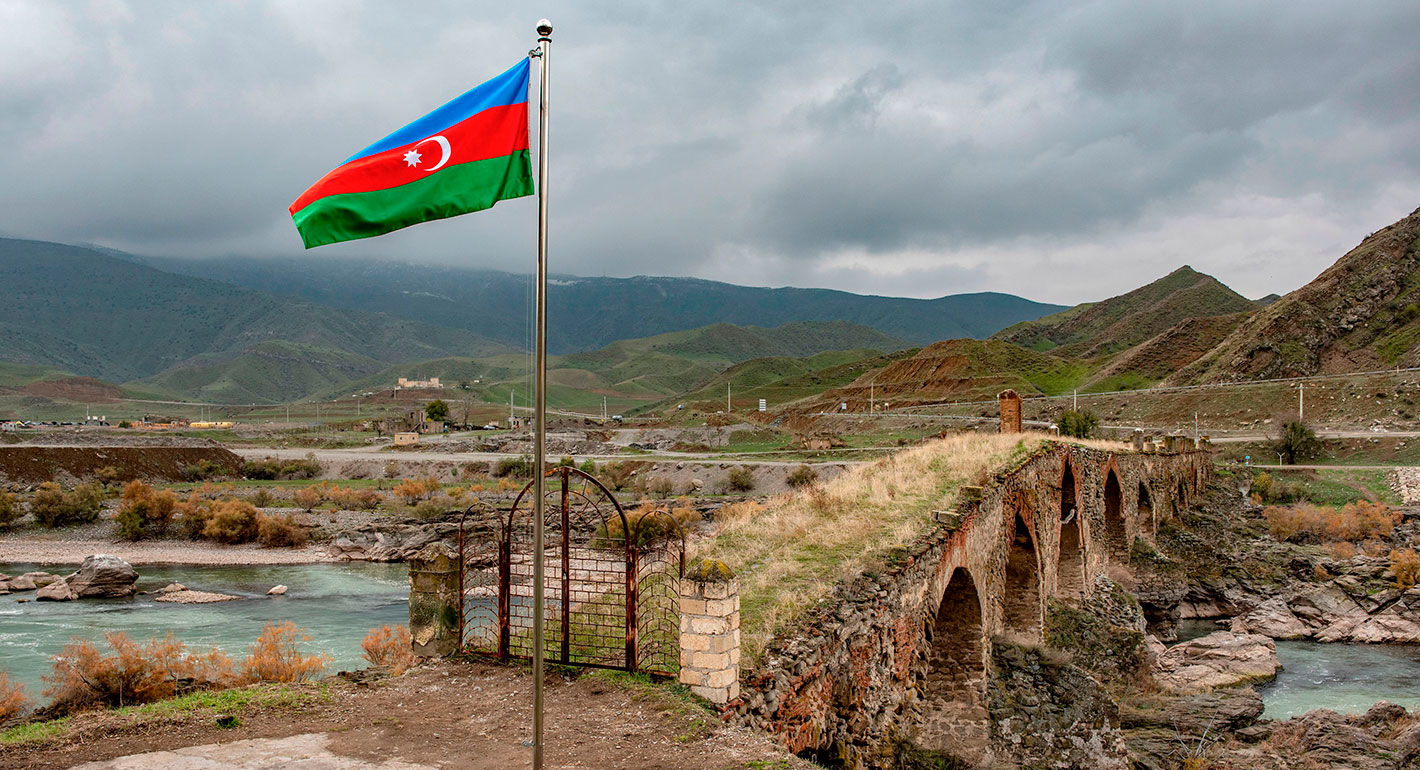
In an interview, Sergei Melkonian discusses Armenia’s and Azerbaijan’s careful balancing act among the United States, Israel, and Iran.
Sergei Melkonian is a research fellow at the Applied Policy Research Institute of Armenia, a think tank based in Yerevan. He analyzes Russian foreign policy as well as developments in the South Caucasus and the Middle East. Diwan interviewed him in mid-March to discuss how the conflict between the United States and Israel on the one side, and Iran and its allies on the other, is being seen in the South Caucasus, particularly after a drone strike targeted the Azerbaijani enclave of Nakhchivan.
Armenak Tokmajyan: How have Armenia and Azerbaijan responded so far to the U.S.–Israeli war on Iran, given their need to maintain good working relations with their large neighbor while avoiding antagonizing Washington, and, in Baku’s case, its key ally Israel?
Sergei Melkonian: Neither Armenia nor Azerbaijan has officially condemned the U.S. and Israeli strikes against Iran. (During the twelve-day war in June 2025, Yerevan condemned Israel’s attacks, whereas Baku adopted a more restrained posture, calling on the two sides to resolve their differences through dialogue and diplomatic means.) Nevertheless, the leaders of Azerbaijan and Armenia expressed condolences following the killing of supreme leader Ali Khamenei—the president of Azerbaijan even visited the Iranian embassy in Baku to do so personally—and were among the first to congratulate his son Mujtaba on his election as new supreme leader. This delicate balancing act underscores the increasing relevance of the United States in the South Caucasus, with both Armenia and Azerbaijan eager to strengthen their relations with Washington, but also the need for the two small republics to balance their ambitions against the interests of their large neighbor Iran.
Yerevan sees its growing ties with Washington as part of its strategy to diversify its foreign relations, and increasingly views Armenian-U.S. cooperation as a security guarantee after years of war with, and pressure from, Azerbaijan. Iran, meanwhile, is not only an important partner but has also helped shore up Armenia’s position in the face of Azerbaijan’s advantage. For Baku, the situation is even more complex: besides its efforts to deepen cooperation with the United States, it has strong strategic relations with Israel. Both these phenomena are a source of tension with Iran.
AT: Why does Iran appear more cautious with its Caucasian neighbors than with its southern ones, and how do Azerbaijan’s close ties with Israel shape Tehran’s calculations?
SM: A key reason for the former is that the South Caucasus countries do not host the kind or scale of U.S. military infrastructure found in several Gulf Arab states, some of which, according to Iran, has been used in the current conflict. As a result, several U.S. military facilities in the Gulf have become natural targets for Iran. As for Türkiye, although similar infrastructure exists there, Turkish territory is not, at least for now, being used to launch attacks against Iran. Moreover, unlike the Gulf Cooperation Council (GCC) states, Türkiye has sufficient military capabilities to mount a serious response. The presence of U.S. nuclear weapons on Turkish soil further reinforces deterrence.
In the South Caucasus, the war’s main security spillover was the drone strike on the airport in Nakhchivan, the Azerbaijani exclave. The incident triggered competing explanations. Ali Larijani, who was at the helm of Iran’s powerful Supreme National Security Council, suggested it was an Israeli attempt to draw regional states into the conflict, while a representative of Iran’s Khatam al-Anbiya Central Command urged Azerbaijan to remove the “Zionist presence” from its territory to avoid further instability and risks to its own security. The firm response by Azerbaijan’s President Ilham Aliyev was to accuse Iran of carrying out a terrorist attack and to place the military on high alert.
What’s sure is that at the heart of the tension lies the Azerbaijan-Israel strategic relationship, which Tehran views with deep suspicion, despite repeated assurances from Baku that it is not directed against Iran. Even so, Tehran does not appear eager to generate broader instability along its northern border.
AT: What economic spillovers is the war generating in the South Caucasus, and which actors stand to gain or lose as trade corridors, air routes, and energy flows are disrupted or rerouted?
SM: Supply chain disruptions have already reached the South Caucasus. For example, roughly 20 percent of Armenia’s export and import operations transit through Iranian territory, with some reported disruptions because of the war. Land and air connectivity with the GCC states, which serve as major commercial and aviation hubs for the South Caucasus, have remained disrupted since the start of the war. In terms of energy prices, Armenia is protected by a long-term favorable gas contract with Russia. However, petroleum derivatives are likely to become more expensive. Armenia and Iran also operate a “gas-for-electricity” arrangement; any potential disruptions in gas supplies could therefore affect the functioning of Armenia’s thermal power plants.
Azerbaijan’s position is more secure. Less than 10 percent of the country’s total cargo volume transits through Iran. In terms of energy, Azerbaijan remains largely self-sufficient and, as an oil producer, it has even benefited from the crisis. The price of Azerbaijani oil has risen to $119 per barrel since the beginning of the war, whereas Baku’s state budget for this year had forecast $65 per barrel and calculated revenues accordingly. Meanwhile, the disruptions to land, air, and maritime links have turned the South Caucasus into one of the main air transit hubs linking Europe and Asia. Despite those short-term gains, prolonged instability is not welcomed by any of the South Caucasian countries.
Prolonged instability in Iran could affect economic connectivity projects across the South Caucasus, both when it comes to the “vertical” routes linking Europe and Russia to the Persian Gulf and onward to Asia through the South Caucasus and Iran, and the “horizontal” routes connecting Europe to Central Asia through the Caucasus. Particularly vulnerable is the International North-South Transport Corridor (INSTC), which currently links Russia to the Persian Gulf through multiple routes. Iran and Russia have sought to develop the INSTC as a counterweight to the East-West alternatives that try to bypass them, but a prolonged war and instability in Iran could throw its viability into question or, at minimum, delay its growth. This might accelerate Iran’s efforts to build up the horizontal routes, despite persistent obstacles such as the need to build infrastructure and the continued closure of the Armenia-Azerbaijan and Armenia-Türkiye borders.
AT: What does Moscow stand to gain from the escalation in the Middle East, and in what ways could the conflict ultimately backfire on Russian interests?
SM: Russia has already benefited from the situation and may continue to do so in the short term. To begin with, global attention has partially shifted from Ukraine to the Middle East. Moreover, newly produced U.S. weapons are likely to be prioritized for Israel and the United States’ Arab partners, as opposed to Ukraine. Additionally, the rise in oil and gas prices and the increased demand for Russian energy supplies amid tensions around the Strait of Hormuz have been a boon for Moscow.
However, in the longer term, the conflict could threaten several Russian strategic projects, including the construction of nuclear power plants in Iran as well as oil and gas extraction initiatives in that country. These projects are not only instruments of Russia’s economic presence in the region but also mechanisms for strengthening the capacity of states that seek greater strategic autonomy from Western dominance. Partly, the situation recalls Russia’s losses in Libya following the outbreak of war, when a major railway project remained unrealized and several oil and gas projects were canceled. Compared to Libya, however, Iran holds far greater strategic significance for Russia in the context of the emerging “global majority,” or “Global South.” The weakening or potential collapse of an anti-U.S. Iran would strengthen American influence across Eurasia, something that would run counter to Russia’s long-term interests.
AT: What are the short-term implications of a potential collapse of the Iranian regime for the South Caucasus?
SM: For the South Caucasus, a collapse of the Iranian regime, subsequent internal security instability, and a humanitarian crisis would be the worst-case scenario. For a start, it would likely create a major refugee crisis. Both Armenia and Azerbaijan already grapple with chronic displacement challenges. The First Nagorno-Karabakh war in the 1990s displaced around 800,000 ethnic Azeris, most of whom remain in limbo, as well as 300,000 ethnic Armenians. Following Azerbaijan’s takeover of Nagorno-Karabakh in 2023, Armenia, a country of only 3 million people, received some 115,000 Armenian refugees, after having already taken in nearly 22,000 during and after the Second Nagorno-Karabakh War. A major wave of Iranian refugees would create enormous administrative, logistical, and humanitarian stress, especially in the southern parts of the two countries.
If regime collapse in Iran were to lead to fragmentation, this would create an additional set of challenges, especially for Armenia and Azerbaijan. Economically, it could disrupt the growing trade and connectivity links between Iran and the three South Caucasus states: Armenia, Georgia, and Azerbaijan. Since 2020, trade between Iran and the region has doubled. If fragmentation were to trigger separatist movements within Iran, Azerbaijan could become involved, given its ethnic ties to around 20 million Azeri Iranians, some of whom might look to Baku for support. Such instability could likewise endanger the 150,000 Armenian Iranians. Overall, though both Yerevan and Baku may welcome a stronger Western presence in the region, the complete collapse of the Iranian regime and long-term instability is clearly not in their interest.

Nonresident Scholar Malcolm H. Kerr Carnegie Middle East Center
Armenak Tokmajyan is a nonresident scholar at the Malcolm H. Kerr Carnegie Middle East Center in Beirut. His research focuses on borders and conflict, Syrian refugees, and state-society relations in Syria.
Recent Work
Armenak Tokmajyan
Armenak Tokmajyan
Carnegie does not take institutional positions on public policy issues; the views represented herein are those of the author(s) and do not necessarily reflect the views of Carnegie, its staff, or its trustees.
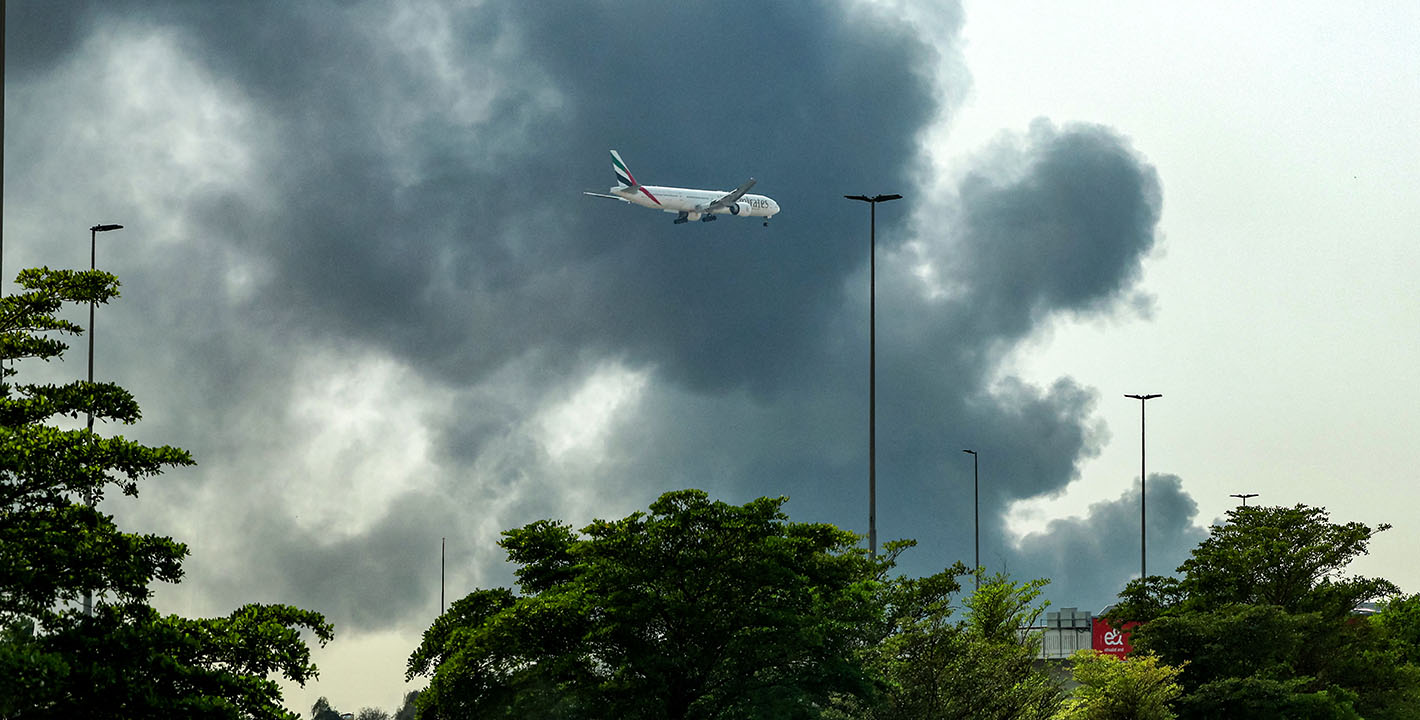
In an interview, Andrew Leber discusses the impact the U.S. and Israeli war against Iran is having on Arab Gulf states.

Michael Young
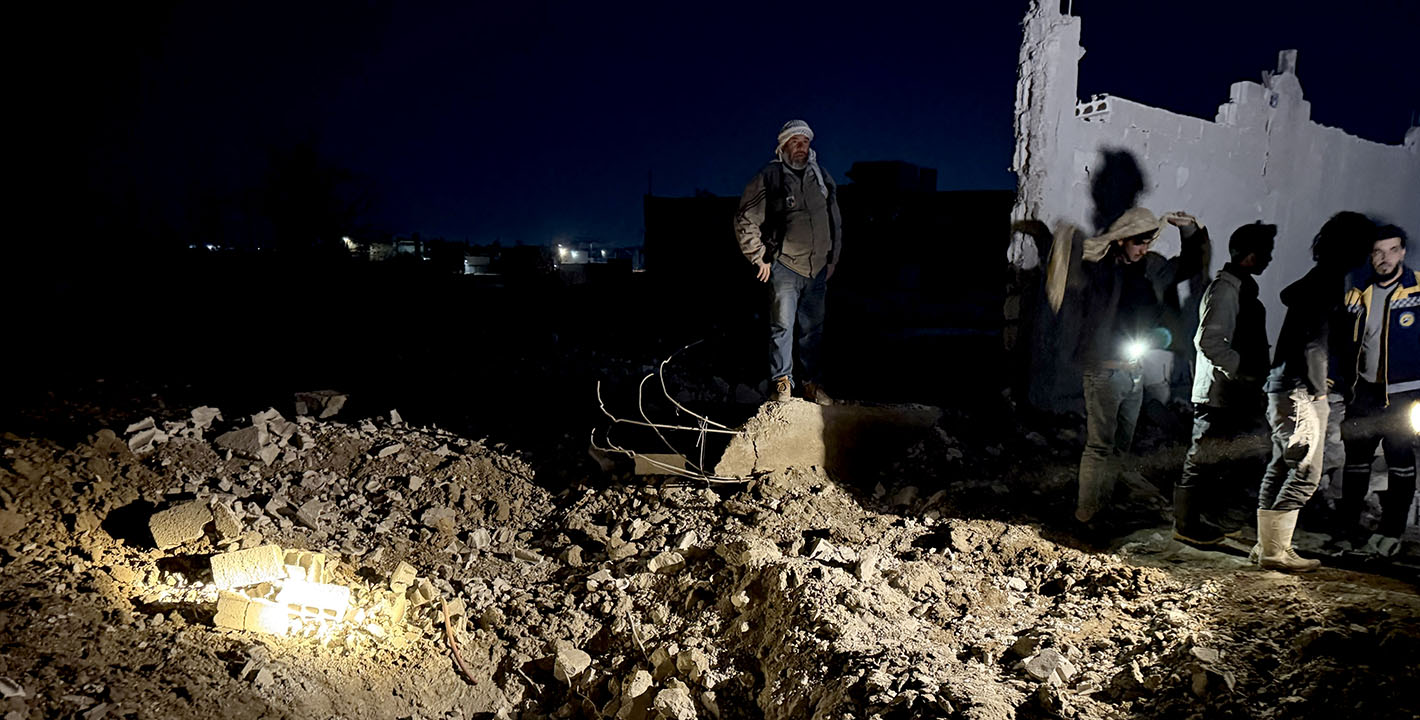
In an interview, Kheder Khaddour explains that Damascus is trying to stabilize its borders, but avoiding war isn’t guaranteed.
Michael Young
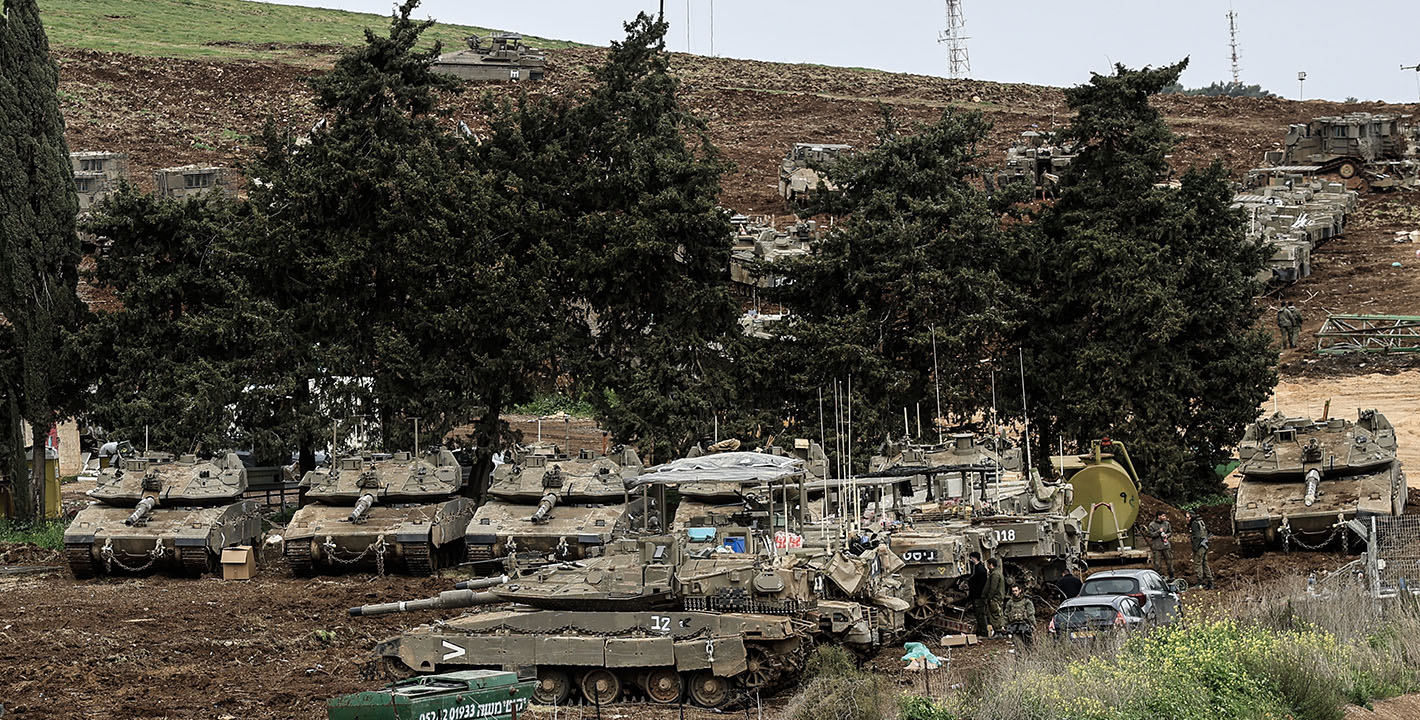
The country’s strategy is no longer focused on deterrence and diplomacy, it’s about dominance and degradation.

Nathan J. Brown
The decision of Lebanon’s parliament may look exceptional, but in reality it is not.

Issam Kayssi
The countries in the region are managing the fallout from Iranian strikes in a paradoxical way.

Angie Omar