

Commentary
French President Emmanuel Macron has unveiled his country’s new nuclear doctrine. Are the changes he has made enough to reassure France’s European partners in the current geopolitical context?
Rym Momtaz, ed.
{
  "authors": [
    "Zsuzsanna Szelényi"
  ],
  "type": "commentary",
  "blog": "Strategic Europe",
  "centerAffiliationAll": "",
  "centers": [
    "Carnegie Endowment for International Peace",
    "Carnegie Europe"
  ],
  "englishNewsletterAll": "",
  "nonEnglishNewsletterAll": "",
  "primaryCenter": "Carnegie Europe",
  "programAffiliation": "",
  "regions": [
    "Europe",
    "Central Europe"
  ],
  "topics": [
    "EU",
    "Democracy",
    "Domestic Politics"
  ]
}
Source: Getty
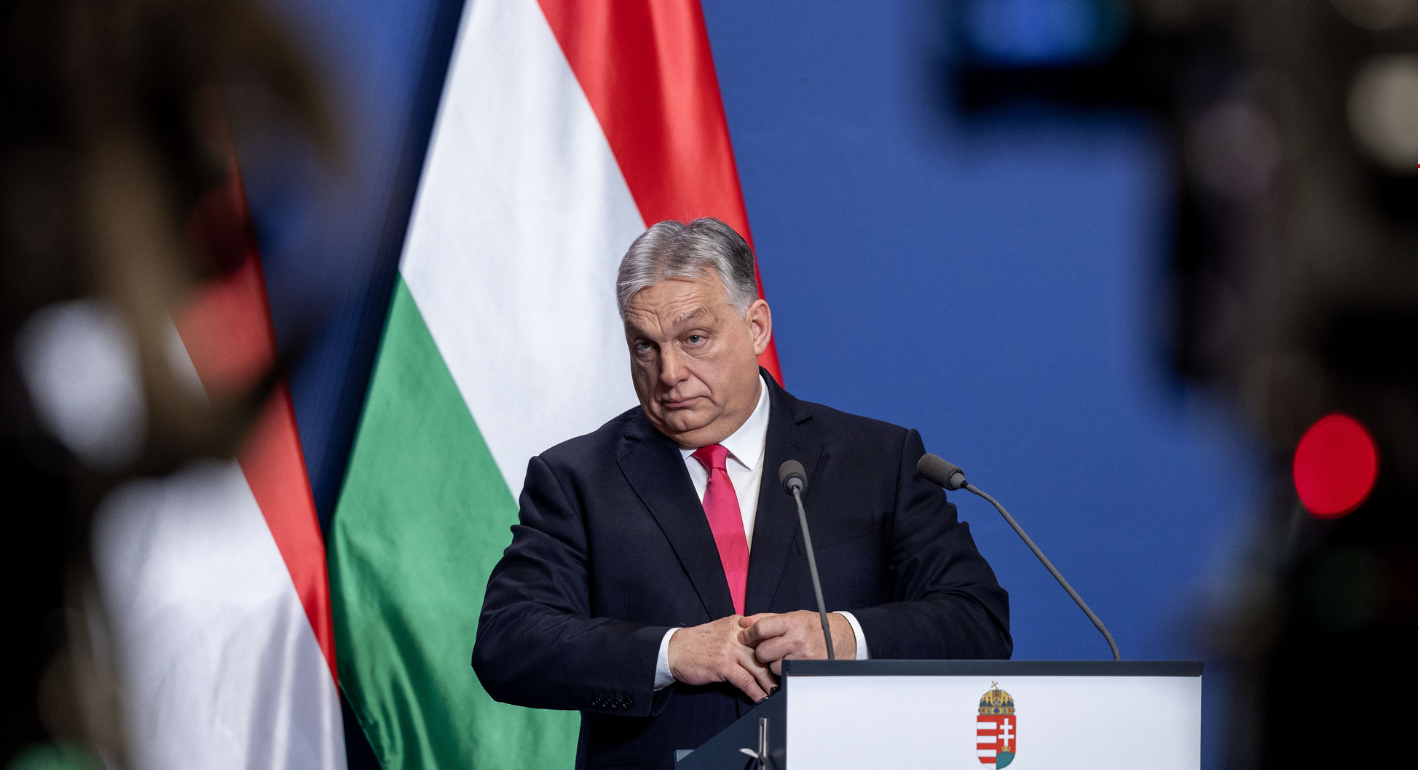
Hungarian Prime Minister Viktor Orbán faces his most serious challenge yet in the April 2026 parliamentary elections. All of Europe should monitor the Fidesz campaign: It will use unprecedented methods of electoral manipulation to secure victory and maintain power.
Hungary’s official election campaign is set to begin in March, but the country is already in the midst of a struggle the likes of which it has never seen. Politics has become everyday conversation, as Hungarians openly ask whether Prime Minister Viktor Orbán can finally be defeated in the April parliamentary elections. For the first time in fifteen years, the decline of his Fidesz party is visible—and measurable. The methods and manipulations his government is employing to try to stave off defeat are also a laboratory of electoral manipulation, which deserves to be watched closely across Europe.
The election has been energized by a new political challenger. Péter Magyar, a previously little-known insider of Orbán’s party and former husband of a Fidesz minister, launched an anti-establishment political movement in the spring of 2024. Within months, his party, Tisza, caught up with Fidesz in the polls and has now established a polling lead between ten and twelve percent. For a governing party that has not faced a credible opponent since 2010, this represents an existential challenge.
Fidesz is not merely a ruling party but a revolutionary political force that has used institutions and public resources to systematically reshape the Hungarian state. Over the past decade, Orbán has also invested tens of millions of euros in building a global illiberal network, with himself at the center. Losing power in Hungary would deprive him of this extraordinary reservoir of influence. Simply put, he cannot afford to lose.
When Péter Magyar emerged as a challenger in early 2024, the government responded with a familiar playbook, launching a smear campaign against him almost immediately. Unlike previous opposition figures, however, Magyar has proved remarkably resilient. His combative style, stamina, and ability to absorb attacks has enabled him to unite the previously fragmented opposition voter base, offering Hungarians a credible alternative to the status quo.
His success is also tactical. He has appropriated elements of Fidesz’s own populist communication style, symbolic language, and political techniques.
Orbán quickly recognized the threat Magyar posed and shifted into full campaign mode. Over the past eighteen months, Fidesz has amended the electoral law twice. First, it abolished the ceiling on campaign spending. This change overwhelmingly benefits the governing party, which in practice operates as an extension of the state. Shortly thereafter, the government gerrymandered more than one-third of electoral districts, with opposition strongholds disproportionately affected.
Preliminary modelling of the newly-revised electoral system suggest a striking asymmetry: An opposition party may need around 55 percent of the popular vote to secure a simple parliamentary majority, while Fidesz could potentially win a constitutional supermajority with as little as 45 percent.
On top of this, the government has once again sought to buy electoral support through expansive handouts targeted at voter groups the government hopes to retain or reclaim, primarily the middle class. These include subsidized housing loans, salary increases for teachers, income tax exemptions for women with multiple children, pension hikes, and one-off bonuses for law enforcement personnel.
To mobilize less politically engaged voters, the party has turned to more aggressive tactics.
Since 2010, Fidesz has built an enormous partisan media ecosystem, reinforced by a highly coordinated social media network. At the center of this system stands the National Communication Office, supervised by a minister within the prime minister’s office. Not only does it design political messaging, but it also controls the advertising budgets of roughly 1,500 state institutions that are required to use its platform. Since 2015, the office has spent €4 billion ($4.7 billion) for various communication campaigns.
Recent restrictions on political advertising imposed by major social media platforms have prompted Fidesz to invest heavily in semiorganized online activism. New formations such as the Fight Club and Digital Citizen Circles were created, along with lavish training camps for thousands of party supporters to share Fidesz’s smear campaign messages intensively. The party’s principal digital content producer, Megafon, reportedly operated on a budget of €14.5 million ($17.2 million) in 2024, allegedly taken from public funds.
Government-aligned actors are also using artificial intelligence (AI) tools to construct an alternative informational reality. In September, a pro-government outlet published a 600-page document presented as the opposition party’s official program. Despite an immediate denial from Tisza and credible indications that the text was AI-generated, the government itself organized a national consultation against a supposed Tisza tax, mailing manipulative questionnaires to every household. Orbán personally framed the exercise as a choice between Tisza’s alleged tax increases and Fidesz’s “family-friendly Hungarian way.”
Networks of AI-generated social media profiles are also producing vast quantities of fabricated and unregulated images and videos promoting government narratives.
The digital campaign heavily promotes a conspiracy narrative linking foreign and domestic enemies: Ukrainian President Volodymyr Zelensky is portrayed as the embodiment of war and external pressure, while Magyar is framed as his domestic proxy. Government-aligned media and billboards are saturated with anti-Ukrainian messaging, including AI-generated videos depicting apocalyptic scenes of war and crime, economic collapse, and Hungarian soldiers returning home in coffins.
Magyar counters this online onslaught by conducting a highly agile and visible grassroots campaign, traveling from village to village and cultivating a devoted following.
In a majoritarian system combined with extreme political polarization, the outcome will ultimately be decided by a few hundred thousand voters. The final days of the campaign are likely to be turbulent. High-profile visits by Orbán’s international allies, scandals involving newly nominated candidates, provocations, and foreign interference are all plausible.
Over twenty years, Fidesz has proved to be a trend-setter in using innovative legal tricks and manipulation in political campaigns. Now that the stakes are higher than ever, Orbán is already setting new precedents in electoral manipulation that Europe should watch closely.
Zsuzsanna Szelényi is founding director of the Democracy Institute Leadership Academy at the Central European University and a former member of the Hungarian parliament.
Subscribe to Strategic Europe, delivered to you weekdays!

Zsuzsanna Szelényi
Central European University
Zsuzsanna Szelényi is the founding director of the Democracy Institute at the Central European University.
Carnegie does not take institutional positions on public policy issues; the views represented herein are those of the author(s) and do not necessarily reflect the views of Carnegie, its staff, or its trustees.
French President Emmanuel Macron has unveiled his country’s new nuclear doctrine. Are the changes he has made enough to reassure France’s European partners in the current geopolitical context?

Rym Momtaz, ed.
European reactions to the war in Iran have lost sight of wider political dynamics. The EU must position itself for the next phase of the crisis without giving up on its principles.

Richard Youngs
Europe isn’t as weak in the new geopolitics of power as many would believe. But to leverage its assets and claim a sphere of influence, Brussels must stop undercutting itself.

Dimitar Bechev
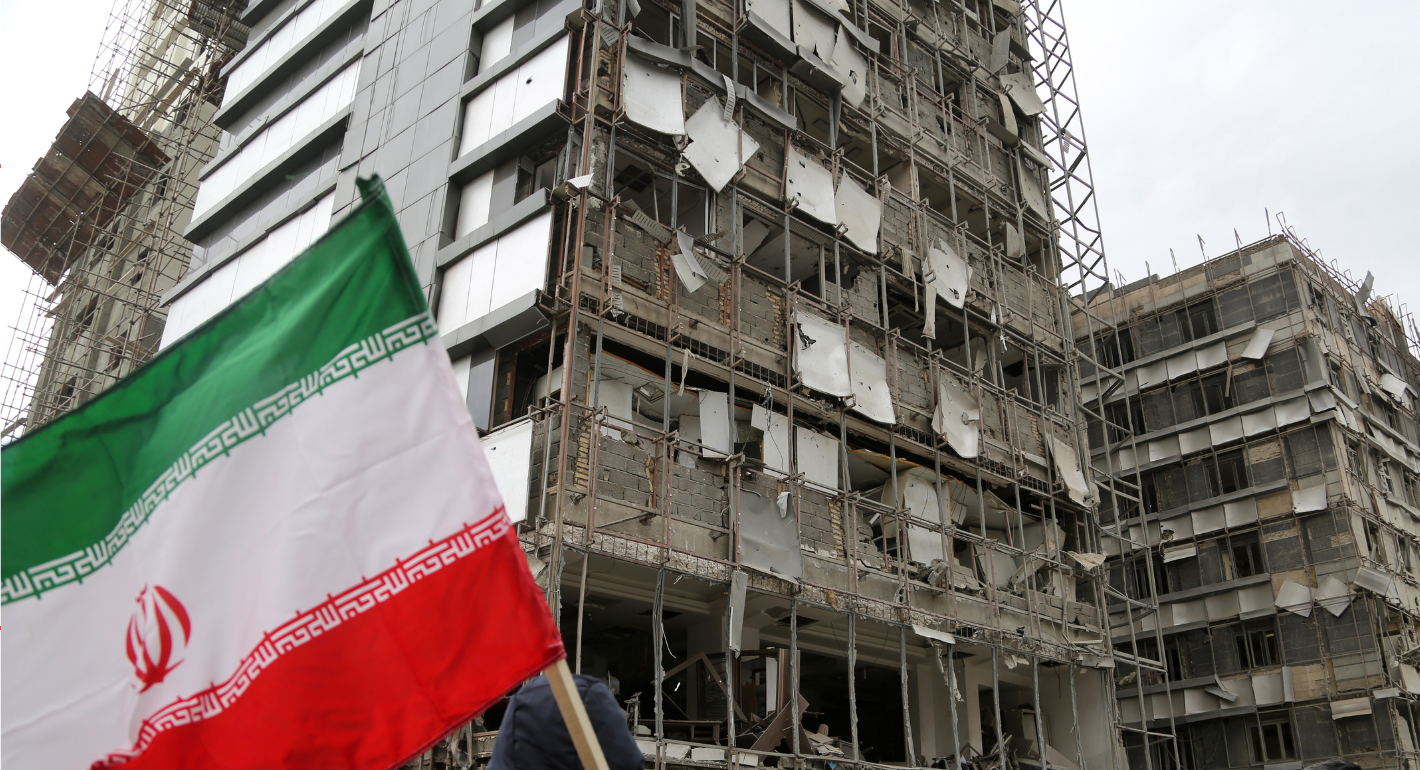
Europe’s reaction to the war in Iran has been disunited and meek, a far cry from its previously leading role in diplomacy with Tehran. To avoid being condemned to the sidelines while escalation continues, Brussels needs to stand up for international law.

Pierre Vimont

France and Germany’s failure to agree on the Future Combat Air System (FCAS) raises questions about European defense. Amid industrial rivalries and competing strategic cultures, what does the future of European military industrial projects look like?
Rym Momtaz, ed.